Buying Guides
A First-Time Buyer's Guide to Pre-Owned Luxury Watches
A calm, practical framework for a first pre-owned watch acquisition — what to consider, what to ask and how to read a listing before you commit.
- Author
- ORELVANT WATCHES Editorial Desk
- Published
- Published May 14, 2026
- Updated
- Updated July 20, 2026
- Reading time
- 8 min read
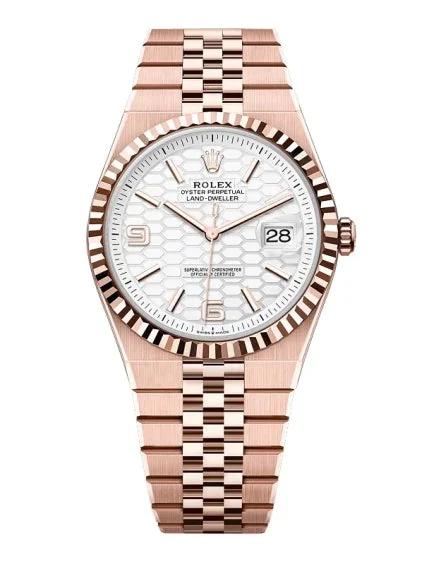
A first pre-owned watch acquisition should feel unhurried. The pre-owned market is deep, private and international, and no single listing is the last opportunity to acquire a well-known reference. This guide is a framework — not a prescription — for approaching a first purchase with the same care a seasoned collector brings to a tenth.
Start with purpose, not price
The first useful question is not "what is my budget" but "what will this watch actually do in my life". A daily companion that will be worn in an office, on flights and at weekends has different requirements — case size, bracelet, water resistance, service accessibility — from a dress watch that will only leave a safe for evenings.
- Wear pattern: daily, weekly, occasional or ceremonial.
- Context: office, active, travel, formal, or a mixture.
- Priorities: legibility, comfort, discretion, presence or complication.
- Longevity: a reference you plan to keep, or a first step in an evolving collection.
Only after that framing does budget become useful. A budget applied to the wrong reference produces a watch you will not wear; the same budget applied to the right reference produces a watch you will not want to sell.
Read by reference, not by nickname
Every serious pre-owned discussion begins with the reference number. Nicknames — "Pepsi", "Snowflake", "Jumbo" — are useful cultural shorthand, but the reference number, together with the production year, defines dial variants, case dimensions, bracelet type, movement calibre and service parts availability.
Learn the condition language
Condition language is not standardised across the industry. One dealer's "excellent" is another's "very good". Rather than trust adjectives, look for structured descriptions: dial, hands, case, bezel, crystal, bracelet or strap, clasp, movement service status, and any known departures from original specification.
- Unworn
- Never worn on the wrist since leaving the manufacturer or an authorised dealer; still with original protective plastics where applicable.
- Mint
- Worn but with no visible signs of use to the naked eye under normal light.
- Excellent
- Very light signs of wear on the case and bracelet, dial and hands intact and free of noticeable defects.
- Very good
- Wear consistent with careful ownership; polish work, if any, is disclosed.
- Good
- Visible wear; may include disclosed service parts or refinishing. Requires careful reading.
Any pre-owned dealer should be able to define, in writing, what each grade means for them. If a dealer will not, that is itself informative.
Completeness: box, papers, service history
Completeness matters for provenance and, on many references, for market position. "Full set" typically means the original box, warranty card or certificate, booklets, tags where applicable, and any service documentation. A watch without papers is not necessarily suspect — many perfectly legitimate watches change hands without them — but the absence should be disclosed and explained, not softened.
Questions to ask about any listing
- What is the exact reference and production year?
- What does the dealer's condition grade mean, in writing?
- Has the watch been polished, and if so, when and by whom?
- Are all parts original to the reference? If not, which have been replaced?
- What is the service history and calibre timing performance today?
- What is included in the sale — box, papers, tags, service records?
- What return and inspection window does the dealer offer?
What to avoid on a first purchase
- Rushing a decision because a listing is described as "the last one at this price".
- Buying without high-resolution photographs of dial, case profile, bracelet end-links, clasp and case back.
- Ignoring service intervals in favour of aesthetic factors alone.
- Treating a first purchase as a financial trade rather than a considered object.
Is a full set essential?
It is preferable and often relevant to market position, but the absence of a full set is not, by itself, a warning sign. What matters is that the absence is disclosed and explained.
Should I only buy watches that have been serviced recently?
Not necessarily. Recent service is reassuring on older references; on more recent watches it may be unnecessary. Ask for the calibre's current timing and any known irregularities.
How much should I pay above the visible price?
Consider a plausible upcoming service, insurance, appropriate storage, and — for cross-border purchases — any applicable duties and taxes.
Editorial disclosures
- Market pricing can change and depends materially on reference, condition, completeness, provenance and demand.
- ORELVANT WATCHES is an independent reseller of pre-owned timepieces. We are not affiliated with, sponsored by, or endorsed by any watch manufacturer. Brand names and model references are used for descriptive identification only.